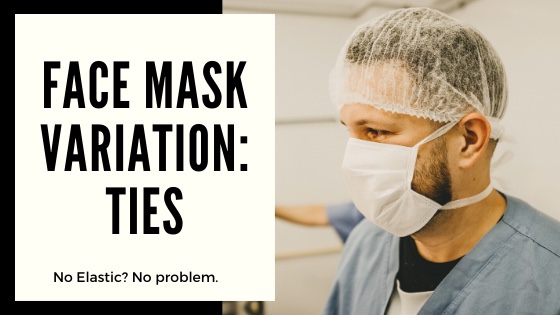
Mask Variation – No Elastic
No Elastic? No problem!
Instead, you can make ties.
Materials
Almost all the same materials as we had before, minus the elastic.
Instead, we’re going to need much more binding – ideally bias strips, but we can make do with strips on the grain if needs be. This time, we’re going to want a piece 1 3/4” wide and 30” long.
Method
Follow the standard instructions until Step 7.
Step 7 – Pleat
This time, you want to pleat the fabric as normal and stay stitch, but as you have no elastic, you won’t sew this in at this stage.
Step 8 – Binding
This is where we’re really going to do things differently.
First, we need to find the midpoint, and match it to the midpoint on the mask. Sew this onto the back of the mask, along the fold line for the bias binding. Fold over and pin in place. Follow the binding out from the midpoint and fold in the ends. Press if needed.
Now we’re going to sew the binding. Starting at the mask at one end, topstitch the binding together.
My favourite trick for sewing bias binding is to use a folded piece of paper to guide it into shape. This also has the advantage that you can get it out of the way when we reach the mask, unlike purpose built binding guides. This isn’t an original trick – I learnt it from Lemon Mint Studio on YouTube.
When you reach the mask, take care that your binding matches on the front and back, and continue stitching along the edge of your binding, securing the edges of the mask.
Then it is just a case of top stitching the rest of the binding and tidying your threads.
And there you have it, a tie-on mask!